
How alum Jimmy Rojas is working to eliminate greenhouse gas emissions from hydrogen production
Jimmy Rojas, PhD ’21, took the course Stanford Climate Ventures in the second year of his studies at Stanford University. The class teaches students how to launch cleantech startups. Rojas loved it so much, he took it again. Eventually, he was promoted to teaching assistant. After that he attended the class for fun until he graduated in 2021.

With his PhD in mechanical engineering, master’s degree in management science and the course’s toolkit in hand, Rojas launched a company seeking to create emissions-free water electrolyzers. In less than a year, his startup EvolOH won millions in grants. The name stands for “evolution of hydrogen,” and that is the company’s aim: making emissions-free hydrogen an affordable part of the energy future. Forbes named Rojas to their “30 Under 30 in Energy” list for 2022.
“I thought, ‘What technology, if we solve all its challenges, is actually going to make a difference?’ And I found that to be pure water anion exchange membrane electrolysis,” said Rojas.
That process can produce green hydrogen from water. Most of today’s “brown” hydrogen, as it is known, is produced from natural gas, which emits 10 kilograms of CO2 for every kilogram of hydrogen produced. Electrolysis separates chemical-free water into hydrogen and oxygen by sending an electric current through it. If the electricity comes from renewable sources, the process emits no greenhouse gases.
Settling on sustainability
Rojas grew up in Costa Rica. When he was around nine years old, he watched footage of NASA’s STS-111 mission to the International Space Station on his grandma’s TV.
“The mission had a Costa Rican astronaut onboard, and he had graduated from MIT.” Rojas determined then and there that he wanted to attend MIT.
After graduating high school, Rojas declined offers from local colleges. Instead, he worked for a year, helping to provide for his family while also learning English from books and music. When it came time to apply to college, Rojas had saved just enough money to take the SAT and apply to one college.
“I chose MIT, and thankfully it worked out,” he laughed. “I did a lot of research from the day I arrived. I knew I wanted to work in either energy or space, since in my opinion those are the industries of the future.”
At MIT, Rojas researched the design of carbon substrates for satellite propulsion and developed now-patented technology.
“I worked with a technology that ended up being the product for a pretty successful startup. I learned about startups and found it fascinating how people create value by being innovative and help the planet in the process.”

Toward the end of his undergraduate work, Rojas took courses in entrepreneurship and began learning about hydrogen. He determined that he wanted to work in the sustainability field.
Finding mentorship at Stanford
Rojas reached out to Arun Majumdar, professor of mechanical engineering at Stanford. The two got excited about working on hydrogen. When Rojas got into the university Majumdar became his advisor.
“Jimmy will do whatever it takes to solve a problem,” said Majumdar. While pursuing his PhD, Majumdar shared, Rojas wanted to develop a computational technique for his research with which neither he nor Majumdar were familiar. So, Rojas flew to Seoul, South Korea to learn the technique from a professor there.
And Rojas is not satisfied with working on just one thing at a time, Majumdar added. While working on his PhD, he also developed the electrochemical technology he now employs at his startup.
“I still see him in the lab once in a while,” said Majumdar, who is an advisor to the company. “He’s trying to finish a research paper while running a company.”
The production problem
Hydrogen is used mostly to make fuel and fertilizer. Refineries use hydrogen to cut oil molecules into smaller pieces for gasoline, diesel, jet fuel and other chemicals. Combining hydrogen with nitrogen produces the main type of commercial fertilizers. Methanol – used in products from fuels to plastics and paints – is also created using hydrogen.
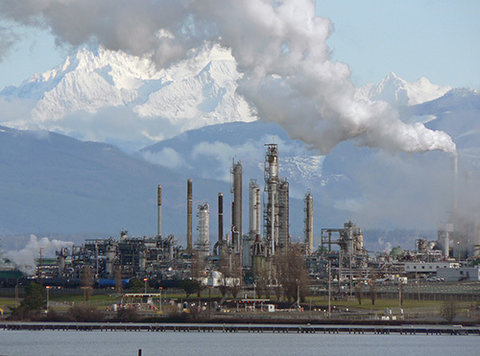
Brown hydrogen beats green hydrogen in the market due to price. Rojas aims to drive down the cost of producing green hydrogen to $1 per kilogram, equal to the current cost of producing brown hydrogen. Green hydrogen costs more than $3 per kilogram, but Rojas estimates that a combination of falling electricity costs and the development of cheaper electrolyzers can drive that down.
Today’s electrolyzers are expensive and difficult to maintain. One main type is an enormous, complicated machine developed around 130 years ago. The other type is smaller and has titanium layers coated with platinum, iridium, ruthenium and gold. The metals are difficult to mine and refine, and, said Rojas, the supply chains are not reliable because they depend on geopolitical stability.
“That’s not a chemical plant. It’s a jewelry box,” said Rojas.
Solving the hydrogen puzzle
The company seeks to solve the problems of both kinds of electrolyzers by creating a smaller, cleaner machine made of cheaper, domestic materials.
“We’re talking to companies in Australia and Chile that find it fascinating that our electrolyzers can be made in Australia and Chile with a domestic supply chain.”
Much of EvolOH’s research is funded by a fellowship from Breakthrough Energy, a network of investors and philanthropists led by Bill Gates, as well as grants from the U.S. Department of Energy’s Advanced Research Projects Agency–Energy and the California Energy Commission. Nevertheless, sustainability ventures must overcome barriers to commercialize a new technology.
“Much of the challenge is moving away from the status quo,” said Rojas. “Just because things work now, doesn’t mean they’re okay.”
Rojas knows his team seeks to create comprehensive solutions that address all issues, because old habits die hard. For example, steel production produces about 8 percent of global CO2 emissions, but convincing the steel industry, which has produced steel basically the same way for decades, to melt iron ore with hydrogen rather than coke is a challenge.
But Rojas isn’t too worried.
“In general, everyone is always a little hesitant about transitions to new technologies. But after a while, people will test them and find that it just makes sense.”
The startup is moving to a larger facility and ramping up production of its electrolyzers to fulfill its first orders.
“When you actually see that your device has the potential to positively impact millions of people around the world, and people get interested and they’re willing to pay for it, it feels amazing,” said Rojas.
This article is part of a series highlighting the ways alumni are putting to work what they learned at Stanford. The projects and entities mentioned in this series are not endorsed by or affiliated with Stanford University.
Claudia I. Moses is a Stanford student and communications intern at the university's Precourt Institute for Energy.
Explore More
-
William Tarpeh uses his advanced membrane materials and electrochemical processes for energy-efficient recovery of other elements, too, including lithium from spent batteries.


